Gateway monument & entrance sign
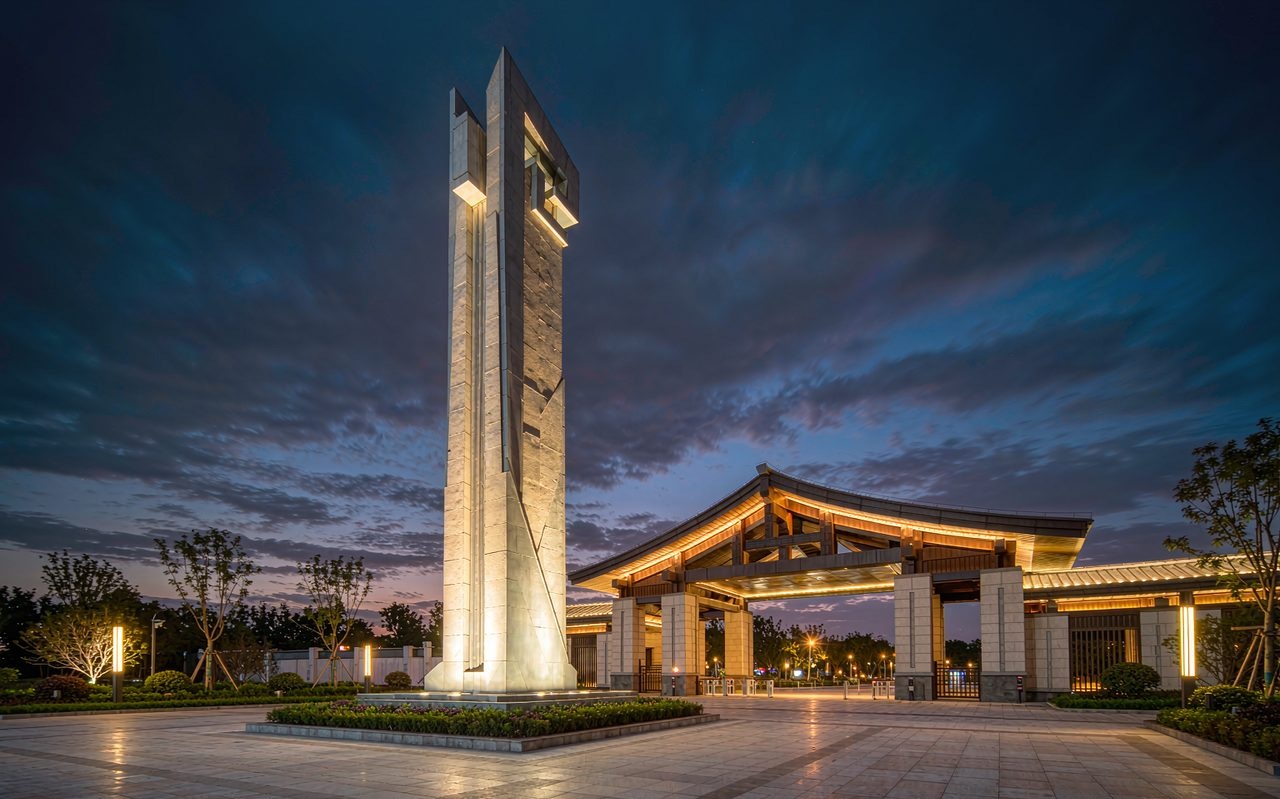
Entrance monuments and gateway signage, built for weather and scale.
Overview
An entrance sign is read at speed and lives outdoors permanently. Lettering, structure and illumination are designed together so the sign reads clearly in daylight and at night, and looks deliberate from the road.
When to choose it
Spiritual and cultural civilisation signage is chosen where a public space needs values, guidance and identity expressed as a coherent system rather than as separate boards. It suits parks, communities, campuses, government precincts and public squares. The critical discipline is coherence: these schemes fail when each board is designed individually and the precinct reads as a collection of unrelated notices.
How it is made
The site is audited first - what exists, what messages must be carried, and how people move through it - so the system is designed around the visitor's route rather than around the available walls. A consistent family is established: a typographic hierarchy, a palette, a material range and a set of panel types that can be combined for different messages. Content is written to be read in passing, and the grammar is held across every board so the series reads as one voice. Installation and maintenance are considered at design stage, since outdoor signage will need cleaning and occasional replacement.
Typical specifications
| Materials | Stone, GRC, stainless, weathering steel, cast or cut metal letters |
|---|---|
| Scale | From 2 m markers to 20 m gateway structures |
| Illumination | Internally illuminated letters, floodlighting or unlit |
| Lead time | 6-12 weeks |
Typical applications
- Scenic-area and park entrances
- Campus and estate entrances
- Industrial park identity
- Village gateways
- Resort entrances
What goes wrong on site
- Designing boards one at a time, producing a precinct where nothing looks related to anything else.
- Writing content at report length, when it will be read in passing and needs to be understood in seconds.
- Leaving out the maintenance plan, so a considered system looks neglected within a year.
Before an overseas project starts
Route and placement
Send a plan with the visitor route and the intended message points. The system is designed around the walk, not the wall.
Content and voice
Send the wording and any required terminology. Consistency of language is what makes the system read as one thing.
Materials and climate
Outdoor signage in this category faces full weather. Tell us the location so the materials are specified for it.
Questions buyers ask
Which lighting suits an entrance sign?
Floodlighting for large stone or GRC structures, internally illuminated channel letters where the brand must read at distance after dark. Both are designed into the structure.
How are letters fixed so they stay fixed?
Letters are mechanically fixed and bonded with a documented fixing detail, and serviceable where lighting or maintenance access is needed.
How a project runs
- 1. EnquirySend photographs, drawings or a 3D file with approximate dimensions and your target date. A short written brief is enough to start.
- 2. Technique recommendationWe come back with the technique that fits your substrate, viewing distance and budget, plus the alternatives we rejected and why.
- 3. Sample and quotationA colour or material sample where relevant, and a costed quotation split into material, labour, finishing, packing and freight.
- 4. ProductionWork proceeds in our own workshop with dated progress photographs at agreed milestones.
- 5. Packing and shippingCrated and marked to your forwarder's requirements, with the full export document set prepared in advance.
- 6. Installation or handoverOur own crew installs on site, or we supply a fixing method statement and supervise your contractor locally.
Packing, shipping and export
Overseas projects are normal work for us, and packing is designed for the journey rather than added afterwards. Components are numbered against a packing list so assembly on site follows the drawings.
- Export plywood crates with foam blocking, desiccant and heat-treated (ISPM 15) timber
- Each crate marked with the shipping mark, crate number, gross and net weight and handling symbols
- Packing list keyed to the assembly drawings, so parts are identifiable on arrival
- Full document set: commercial invoice, packing list, certificate of origin and fumigation certificate
- Delivery on EXW, FOB, CIF or DDP terms depending on your forwarder arrangements
- Container loading plan supplied for large or irregular items, with a photo record of loading
Commercial terms
| Payment | Deposit on order, balance before shipment; T/T or as agreed in the contract |
|---|---|
| Currency | RMB or USD, invoiced in the agreed currency |
| Validity | Quotations held for 30 days unless stated otherwise |
| Scope basis | Material, labour, finishing, packing and freight quoted as separate lines |
| Changes | Variations priced in writing before the work proceeds |
| Warranty | Defects against workmanship and material failure within the agreed warranty period |
Quality control
- Dimensional and finish checks at each production milestone, not only at the end
- Dated progress photographs sent to the client throughout production
- Pre-shipment assembly trial for multi-part pieces, so site fit is verified before dispatch
- Third-party inspection welcome; we will prepare the access and documentation needed
- Written handover with material and colour records, so later repairs can be matched
Other techniques in this capability
All Signage & Wayfinding techniques · Full capability page · Complete technique library
Need this technique on your project?
Send the brief, approximate dimensions and destination. We will come back with a technique recommendation and a reference price band.
Request a quoteHow export works