Pure gypsum relief
Fine white plasterwork for classical and contemporary interiors.
Overview
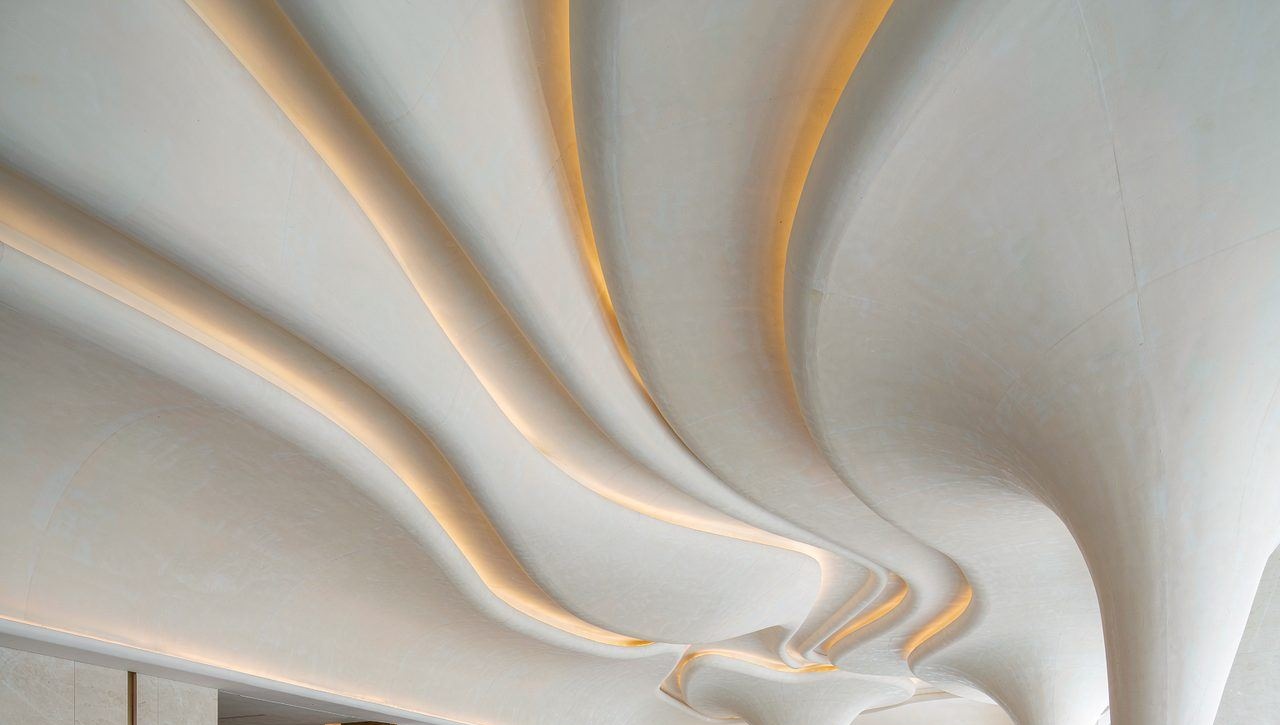
Pure gypsum is cast in moulds and finished by hand, giving crisp edges and a smooth, paintable surface. It is an interior material, and the default choice where a design needs precise, repeatable profiles rather than a weathered look.
When to choose it
Pure gypsum relief is the reference standard for interior ornament: crisp edges, a surface that takes paint or gilding beautifully, and a depth that reads properly under grazing light. It is chosen when the detail itself is the point - cornices, ceiling centres, decorative panels, period-appropriate interiors. It is the wrong material for exteriors or for damp rooms, where gypsum will fail regardless of how well it is sealed.
How it is made
Moulds are taken from approved patterns, and the plaster is cast in a controlled workshop temperature so set time and therefore hardness stay consistent. Reinforcement is set into the casting where spans or thin sections demand it, rather than added afterwards. Sections are dry before delivery, because plaster installed damp will shrink back and open a line exactly along the joint. Fixing uses mechanical support in addition to adhesive, and joints are filled and sanded so the run reads as one continuous moulding.
Typical specifications
| Typical size | Panels from 0.3 m2 to 6 m2 each |
|---|---|
| Lead time | 2-4 weeks including mould-making |
| Substrate | Masonry or stud wall with a dry, stable backing |
| Finishes | Primed for paint, or painted and glazed in the workshop |
Typical applications
- Interior wall panels
- Cornices and architraves
- Columns and pilasters
- Ceiling panels
- Door surrounds
What goes wrong on site
- Fixing with adhesive alone on a ceiling, where the failure mode is not a crack but a fall.
- Installing before the casting is fully dry, which produces shrinkage gaps along every joint.
- Sanding a gilded or painted finish after installation, which destroys the very crispness the material was chosen for.
Before an overseas project starts
Pattern source
Send the profile you want matched, or photographs plus a dimension. Matching an existing period moulding usually means taking a rubber cast on site.
Substrate and fixings
Confirm the wall or ceiling build-up and what it can carry. Plasterboard, concrete and timber each need a different fixing strategy.
Finish intent
Paint, gilding, limewash or exposed plaster each require a different surface preparation, decided before casting rather than after.
Questions buyers ask
Is gypsum suitable in damp rooms?
No. Plain gypsum absorbs moisture and will soften. For bathrooms, pools and exteriors we specify GRC or another suitable alternative.
How are joints between panels hidden?
Panel layout is planned on a setting-out drawing so joints fall on moulding lines, then filled, sanded and finished so they disappear under paint.
How a project runs
- 1. EnquirySend photographs, drawings or a 3D file with approximate dimensions and your target date. A short written brief is enough to start.
- 2. Technique recommendationWe come back with the technique that fits your substrate, viewing distance and budget, plus the alternatives we rejected and why.
- 3. Sample and quotationA colour or material sample where relevant, and a costed quotation split into material, labour, finishing, packing and freight.
- 4. ProductionWork proceeds in our own workshop with dated progress photographs at agreed milestones.
- 5. Packing and shippingCrated and marked to your forwarder's requirements, with the full export document set prepared in advance.
- 6. Installation or handoverOur own crew installs on site, or we supply a fixing method statement and supervise your contractor locally.
Packing, shipping and export
Overseas projects are normal work for us, and packing is designed for the journey rather than added afterwards. Components are numbered against a packing list so assembly on site follows the drawings.
- Export plywood crates with foam blocking, desiccant and heat-treated (ISPM 15) timber
- Each crate marked with the shipping mark, crate number, gross and net weight and handling symbols
- Packing list keyed to the assembly drawings, so parts are identifiable on arrival
- Full document set: commercial invoice, packing list, certificate of origin and fumigation certificate
- Delivery on EXW, FOB, CIF or DDP terms depending on your forwarder arrangements
- Container loading plan supplied for large or irregular items, with a photo record of loading
Commercial terms
| Payment | Deposit on order, balance before shipment; T/T or as agreed in the contract |
|---|---|
| Currency | RMB or USD, invoiced in the agreed currency |
| Validity | Quotations held for 30 days unless stated otherwise |
| Scope basis | Material, labour, finishing, packing and freight quoted as separate lines |
| Changes | Variations priced in writing before the work proceeds |
| Warranty | Defects against workmanship and material failure within the agreed warranty period |
Quality control
- Dimensional and finish checks at each production milestone, not only at the end
- Dated progress photographs sent to the client throughout production
- Pre-shipment assembly trial for multi-part pieces, so site fit is verified before dispatch
- Third-party inspection welcome; we will prepare the access and documentation needed
- Written handover with material and colour records, so later repairs can be matched
Other techniques in this capability
Feature-wall gypsum relief
One wall, fully designed - graphic relief at architectural scale.
Read guide →French-style plasterwork
Ornate French and European detail - rosettes, panels and boiserie.
Read guide →Cornices & Roman column mouldings
Repeatable profiles - cornices, columns, capitals and architraves.
Read guide →All Gypsum Relief & Decorative Plaster techniques · Full capability page · Complete technique library
Need this technique on your project?
Send the brief, approximate dimensions and destination. We will come back with a technique recommendation and a reference price band.
Request a quoteHow export works