Oil & textured hand painting
Palette-knife texture and oil depth for interiors that should feel painted, not printed.
Overview
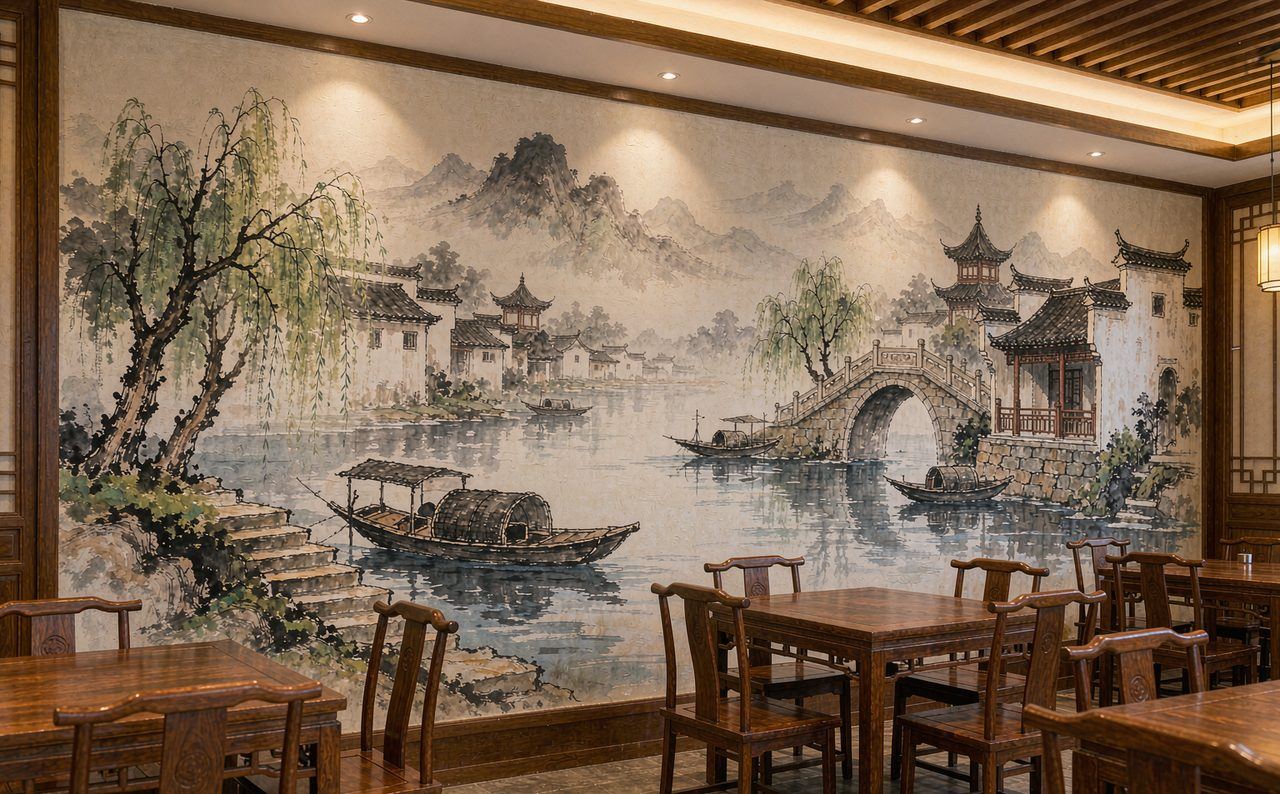
Oil and heavy-body media give a mural physical relief: ridges, impasto and a surface that changes with the light. It is chosen where the wall should read as a painting in its own right rather than decoration applied to a surface.
When to choose it
Oil and heavy-body media are chosen when the wall should read as a painting in its own right, with ridge, impasto and a surface that changes as the light moves. It is the right answer for a single important panel and the wrong answer for a long repetitive run, because every square metre carries the same hand time. It also needs more patience than acrylic: the layers cannot be rushed, and the wall is not finished until the drying time has actually elapsed.
How it is made
The substrate is primed and left to settle, because oil media will telegraph every imperfection underneath. Work is built in layers from lean to fat so the upper coats stay flexible over the lower ones, and each layer is given its full drying interval before the next. Texture is built with palette knife and heavy-body medium rather than thickened paint, which keeps the ridges crisp instead of sagging. A low-sheen varnish seals it and allows damp cleaning without flattening the relief.
Typical specifications
| Typical size | Single panel 2-30 m2 |
|---|---|
| Lead time | 4-10 days, allowing drying between layers |
| Substrates | Canvas panel, primed board, sealed plaster |
| Finish | Matt or satin varnish with low sheen |
Typical applications
- Hotel lobbies and suites
- Fine-dining rooms
- Gallery and showroom interiors
- Executive offices
- Private residences
What goes wrong on site
- Rushing the drying intervals - the surface may look dry while the layer under it is still moving, and it will craze later.
- Using a high-gloss varnish on a wall with strong directional light, which turns the texture into a mirror of the windows.
- Priming with a cheap sealer that stays slightly chalky, so the oil layer never fully bonds and can be lifted with a fingernail.
Before an overseas project starts
Panel or wall
Decide early whether the work is painted in place or on a panel and hung. A panel can be made in the workshop with better control, but it needs a hanging system and a wall that can take the weight.
Full curing window
Oil media stay soft after they look dry. Tell us the date the space opens so we can confirm the wall is genuinely ready and not merely touch-dry.
Cleaning regime
Tell us who cleans the space and with what. A mild damp cloth is fine on cured varnish; a solvent spray will mark it.
Questions buyers ask
How long does oil media take to dry?
Oil and heavy-body media dry slowly by design. We plan the layers so the wall is dry and safe to use at handover, and we state the full curing window up front.
Can the finish be wiped clean?
Yes, once cured. A low-sheen varnish allows gentle damp cleaning without flattening the texture.
How a project runs
- 1. EnquirySend photographs, drawings or a 3D file with approximate dimensions and your target date. A short written brief is enough to start.
- 2. Technique recommendationWe come back with the technique that fits your substrate, viewing distance and budget, plus the alternatives we rejected and why.
- 3. Sample and quotationA colour or material sample where relevant, and a costed quotation split into material, labour, finishing, packing and freight.
- 4. ProductionWork proceeds in our own workshop with dated progress photographs at agreed milestones.
- 5. Packing and shippingCrated and marked to your forwarder's requirements, with the full export document set prepared in advance.
- 6. Installation or handoverOur own crew installs on site, or we supply a fixing method statement and supervise your contractor locally.
Packing, shipping and export
Overseas projects are normal work for us, and packing is designed for the journey rather than added afterwards. Components are numbered against a packing list so assembly on site follows the drawings.
- Export plywood crates with foam blocking, desiccant and heat-treated (ISPM 15) timber
- Each crate marked with the shipping mark, crate number, gross and net weight and handling symbols
- Packing list keyed to the assembly drawings, so parts are identifiable on arrival
- Full document set: commercial invoice, packing list, certificate of origin and fumigation certificate
- Delivery on EXW, FOB, CIF or DDP terms depending on your forwarder arrangements
- Container loading plan supplied for large or irregular items, with a photo record of loading
Commercial terms
| Payment | Deposit on order, balance before shipment; T/T or as agreed in the contract |
|---|---|
| Currency | RMB or USD, invoiced in the agreed currency |
| Validity | Quotations held for 30 days unless stated otherwise |
| Scope basis | Material, labour, finishing, packing and freight quoted as separate lines |
| Changes | Variations priced in writing before the work proceeds |
| Warranty | Defects against workmanship and material failure within the agreed warranty period |
Quality control
- Dimensional and finish checks at each production milestone, not only at the end
- Dated progress photographs sent to the client throughout production
- Pre-shipment assembly trial for multi-part pieces, so site fit is verified before dispatch
- Third-party inspection welcome; we will prepare the access and documentation needed
- Written handover with material and colour records, so later repairs can be matched
Other techniques in this capability
Hotel & guesthouse wall art
Guest-room and lobby artwork delivered to a repeatable standard.
Read guide →3D trompe-l'œil wall
Painted depth - architecture, openings and perspective that are not really there.
Read guide →All Wall Painting & Murals techniques · Full capability page · Complete technique library
Need this technique on your project?
Send the brief, approximate dimensions and destination. We will come back with a technique recommendation and a reference price band.
Request a quoteHow export works