Decorative plaster texture wall
Material-led walls - lime, clay and mineral plasters that read as surface, not image.
Overview
Decorative plaster brings colour through the material itself, so the wall has depth, movement and a hand-applied feel with no pictorial content at all. It is the right choice for large or repetitive areas where a printed image would look flat.
When to choose it
Decorative plaster puts the colour into the material itself, so the wall has depth and movement while carrying no image at all. That makes it the right choice for the large, repetitive and long-run areas where a printed picture would look flat and dated, and for interiors where the design intent is calm rather than narrative. It is a poor fit where a specific image must appear, because plaster will not reproduce photographic detail.
How it is made
The base is levelled and primed for absorption, because lime and clay plasters pull moisture out of the mix and will flash differently over an uneven substrate. Material is applied in two or three passes with a trowel, and the texture is worked while the last pass is still live rather than added afterwards. Colour is introduced in the mix itself, or as a mineral wash that is cut back to reveal the variation underneath. A sealer is chosen against the traffic: matt for low-contact walls, a harder-wearing system for corridors and lift lobbies.
Typical specifications
| Typical size | 10-1,000 m2 |
|---|---|
| Lead time | 3-8 days, plus curing |
| Materials | Lime, clay, mineral and acrylic-based plasters |
| Finish | Matt, satin, metallic or waxed |
Typical applications
- Hotel and lobby walls
- Retail backdrops
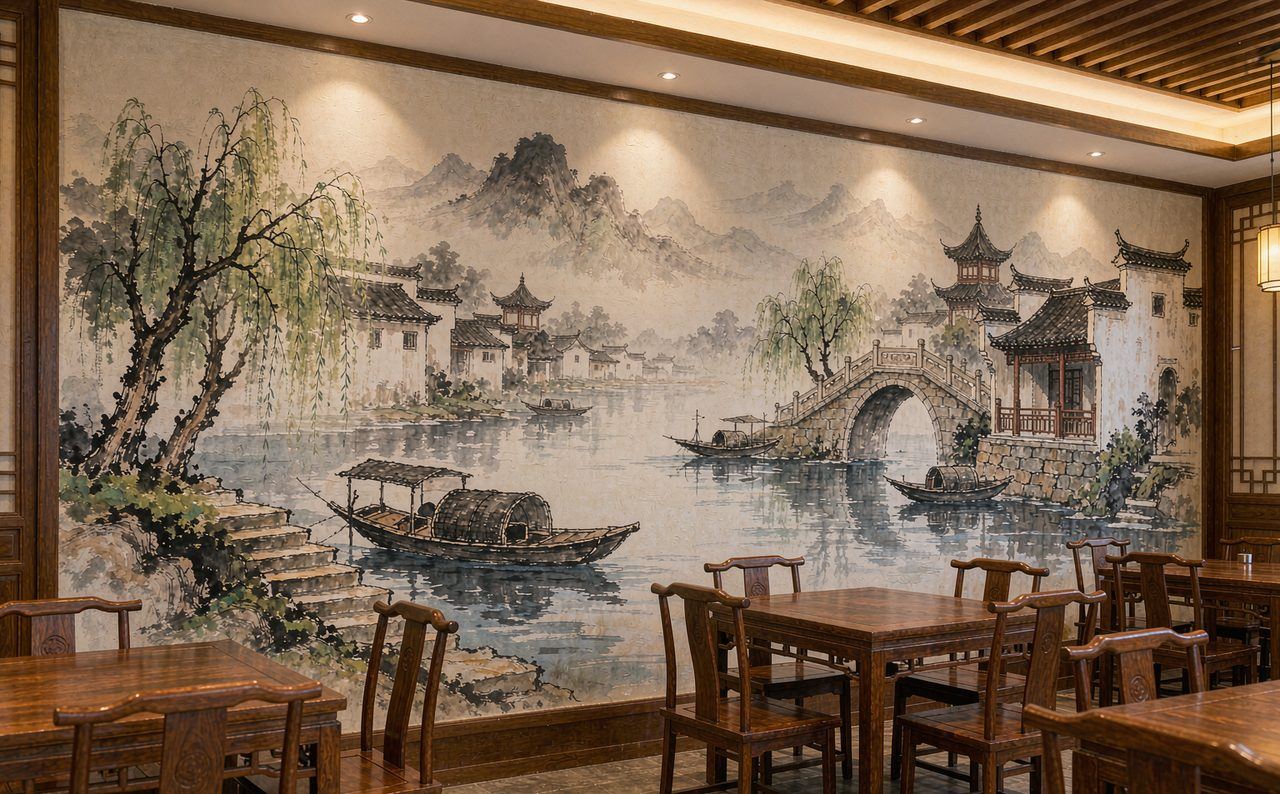
- Restaurant feature walls
- Residential living spaces
- Office reception areas
What goes wrong on site
- Skipping the absorption primer - the same mix will dry to two different colours on the same wall.
- Stopping work mid-wall, leaving a visible join where one trowel session ended and the next began.
- Applying a heavy sealer on a matt plaster intended to look dry and chalky, which locks in a sheen nobody asked for.
Before an overseas project starts
Sample board approval
We produce a physical board in your colour and texture for sign-off. Approving from a photograph is how projects end up with a wall nobody chose.
Substrate condition
Send photographs and note whether the wall is new plaster, painted, or a dry-lined board. Plaster behaves differently on each.
Cleaning and traffic
Tell us if the wall is in a corridor, behind a reception desk, or somewhere people lean. That single fact decides which sealer we specify.
Questions buyers ask
Can the texture be matched to a sample board?
Yes. We produce a physical sample board in the chosen colour and texture for approval before work starts, so what you sign off is what gets built.
Is it suitable for high-traffic areas?
With a protective sealer, yes. We specify a harder-wearing system for corridors, lift lobbies and other surfaces that are regularly touched or cleaned.
How a project runs
- 1. EnquirySend photographs, drawings or a 3D file with approximate dimensions and your target date. A short written brief is enough to start.
- 2. Technique recommendationWe come back with the technique that fits your substrate, viewing distance and budget, plus the alternatives we rejected and why.
- 3. Sample and quotationA colour or material sample where relevant, and a costed quotation split into material, labour, finishing, packing and freight.
- 4. ProductionWork proceeds in our own workshop with dated progress photographs at agreed milestones.
- 5. Packing and shippingCrated and marked to your forwarder's requirements, with the full export document set prepared in advance.
- 6. Installation or handoverOur own crew installs on site, or we supply a fixing method statement and supervise your contractor locally.
Packing, shipping and export
Overseas projects are normal work for us, and packing is designed for the journey rather than added afterwards. Components are numbered against a packing list so assembly on site follows the drawings.
- Export plywood crates with foam blocking, desiccant and heat-treated (ISPM 15) timber
- Each crate marked with the shipping mark, crate number, gross and net weight and handling symbols
- Packing list keyed to the assembly drawings, so parts are identifiable on arrival
- Full document set: commercial invoice, packing list, certificate of origin and fumigation certificate
- Delivery on EXW, FOB, CIF or DDP terms depending on your forwarder arrangements
- Container loading plan supplied for large or irregular items, with a photo record of loading
Commercial terms
| Payment | Deposit on order, balance before shipment; T/T or as agreed in the contract |
|---|---|
| Currency | RMB or USD, invoiced in the agreed currency |
| Validity | Quotations held for 30 days unless stated otherwise |
| Scope basis | Material, labour, finishing, packing and freight quoted as separate lines |
| Changes | Variations priced in writing before the work proceeds |
| Warranty | Defects against workmanship and material failure within the agreed warranty period |
Quality control
- Dimensional and finish checks at each production milestone, not only at the end
- Dated progress photographs sent to the client throughout production
- Pre-shipment assembly trial for multi-part pieces, so site fit is verified before dispatch
- Third-party inspection welcome; we will prepare the access and documentation needed
- Written handover with material and colour records, so later repairs can be matched
Other techniques in this capability
Hotel & guesthouse wall art
Guest-room and lobby artwork delivered to a repeatable standard.
Read guide →3D trompe-l'œil wall
Painted depth - architecture, openings and perspective that are not really there.
Read guide →All Wall Painting & Murals techniques · Full capability page · Complete technique library
Need this technique on your project?
Send the brief, approximate dimensions and destination. We will come back with a technique recommendation and a reference price band.
Request a quoteHow export works