Mirror-polished stainless sculpture
Mirror-polished stainless steel - the reflective, high-impact public piece.
Overview
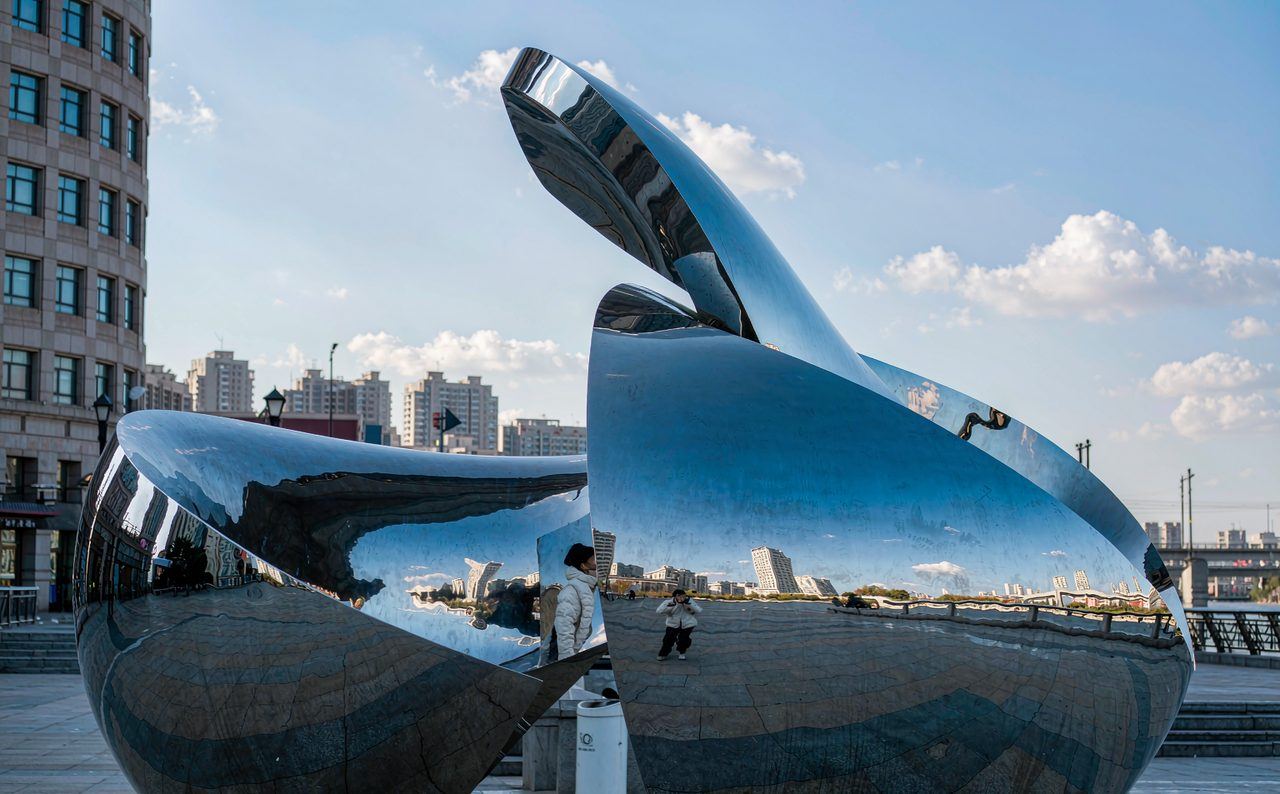
Mirror stainless reflects its surroundings, so the piece changes with weather, season and time of day. Polishing to a true mirror finish is the most labour-intensive part of the job, and it is what separates a good piece from a dull one.
When to choose it
Mirror stainless steel is chosen when the sculpture should reflect its surroundings and effectively disappear into them, contributing pure form and distortion rather than colour. It suits civic and corporate pieces in visually rich settings with something worth reflecting. It is a poor choice where the surroundings are indifferent, because a mirror in front of a car park is an expensive way to show a car park, and where fingerprints and scratching are unmanaged.
How it is made
The form is modelled and the fabrication method chosen against the geometry - panel beating for organic shapes, fabricated plate for faceted ones. Welds are ground and polished in stages through progressively finer abrasives, because a mirror finish exposes every stage of the process that preceded it. Polishing is done under the light the piece will actually live in, since defects invisible under workshop light appear in sunlight. The finished surface is protected and handled with gloves and film until installation is complete.
Typical specifications
| Material | 304 or 316L stainless steel (316L for coastal or marine) |
|---|---|
| Thickness | 1.5-4 mm sheet over an internal steel armature |
| Finish | Mirror polish, grade agreed against a physical sample |
| Sizes | From 1 m to over 15 m tall |
Typical applications
- City landmarks
- Plaza and mall art
- Hotel entrances
- Corporate campuses
- Photo-op installations
What goes wrong on site
- Polishing under workshop lighting, so defects pass inspection and appear the moment the piece is outdoors.
- Handling the finished surface without protection, since a mirror finish records every touch and cannot be spot-repaired invisibly.
- Building a mirror piece on a panel-welded armature without planning the weld positions to land away from dominant reflections.
Before an overseas project starts
Setting and reflections
Tell us where it will stand and what surrounds it. Mirror work is a decision about context as much as about form.
Maintenance and access
Mirror surfaces need regular cleaning and occasional re-polishing. Confirm who does it and how they reach the surface.
Public or private
In public settings, consider whether a mirror finish invites touching. Sometimes a satin finish is the better answer.
Questions buyers ask
How is a mirror finish maintained?
With a soft cloth and a mild detergent, periodically. In polluted or coastal air, a protective coating extends the interval, and deep scratches need re-polishing by us rather than local repair.
Which grade of stainless should we choose?
304 for inland sites, 316L within a few kilometres of the coast or in heavy pollution. Using 304 near salt water is the most common cause of early staining.
How a project runs
- 1. EnquirySend photographs, drawings or a 3D file with approximate dimensions and your target date. A short written brief is enough to start.
- 2. Technique recommendationWe come back with the technique that fits your substrate, viewing distance and budget, plus the alternatives we rejected and why.
- 3. Sample and quotationA colour or material sample where relevant, and a costed quotation split into material, labour, finishing, packing and freight.
- 4. ProductionWork proceeds in our own workshop with dated progress photographs at agreed milestones.
- 5. Packing and shippingCrated and marked to your forwarder's requirements, with the full export document set prepared in advance.
- 6. Installation or handoverOur own crew installs on site, or we supply a fixing method statement and supervise your contractor locally.
Packing, shipping and export
Overseas projects are normal work for us, and packing is designed for the journey rather than added afterwards. Components are numbered against a packing list so assembly on site follows the drawings.
- Export plywood crates with foam blocking, desiccant and heat-treated (ISPM 15) timber
- Each crate marked with the shipping mark, crate number, gross and net weight and handling symbols
- Packing list keyed to the assembly drawings, so parts are identifiable on arrival
- Full document set: commercial invoice, packing list, certificate of origin and fumigation certificate
- Delivery on EXW, FOB, CIF or DDP terms depending on your forwarder arrangements
- Container loading plan supplied for large or irregular items, with a photo record of loading
Commercial terms
| Payment | Deposit on order, balance before shipment; T/T or as agreed in the contract |
|---|---|
| Currency | RMB or USD, invoiced in the agreed currency |
| Validity | Quotations held for 30 days unless stated otherwise |
| Scope basis | Material, labour, finishing, packing and freight quoted as separate lines |
| Changes | Variations priced in writing before the work proceeds |
| Warranty | Defects against workmanship and material failure within the agreed warranty period |
Quality control
- Dimensional and finish checks at each production milestone, not only at the end
- Dated progress photographs sent to the client throughout production
- Pre-shipment assembly trial for multi-part pieces, so site fit is verified before dispatch
- Third-party inspection welcome; we will prepare the access and documentation needed
- Written handover with material and colour records, so later repairs can be matched
Other techniques in this capability
Coloured stainless sculpture
Coloured stainless - automotive-grade paint, powder coat or PVD titanium coating.
Read guide →Brushed stainless sculpture
Brushed stainless - quieter than mirror, and far more forgiving.
Read guide →Perforated stainless sculpture
Perforated and cut-metal sculpture - pattern as structure.
Read guide →All Sculpture Fabrication techniques · Full capability page · Complete technique library
Need this technique on your project?
Send the brief, approximate dimensions and destination. We will come back with a technique recommendation and a reference price band.
Request a quoteHow export works