Site-sculpted cement relief
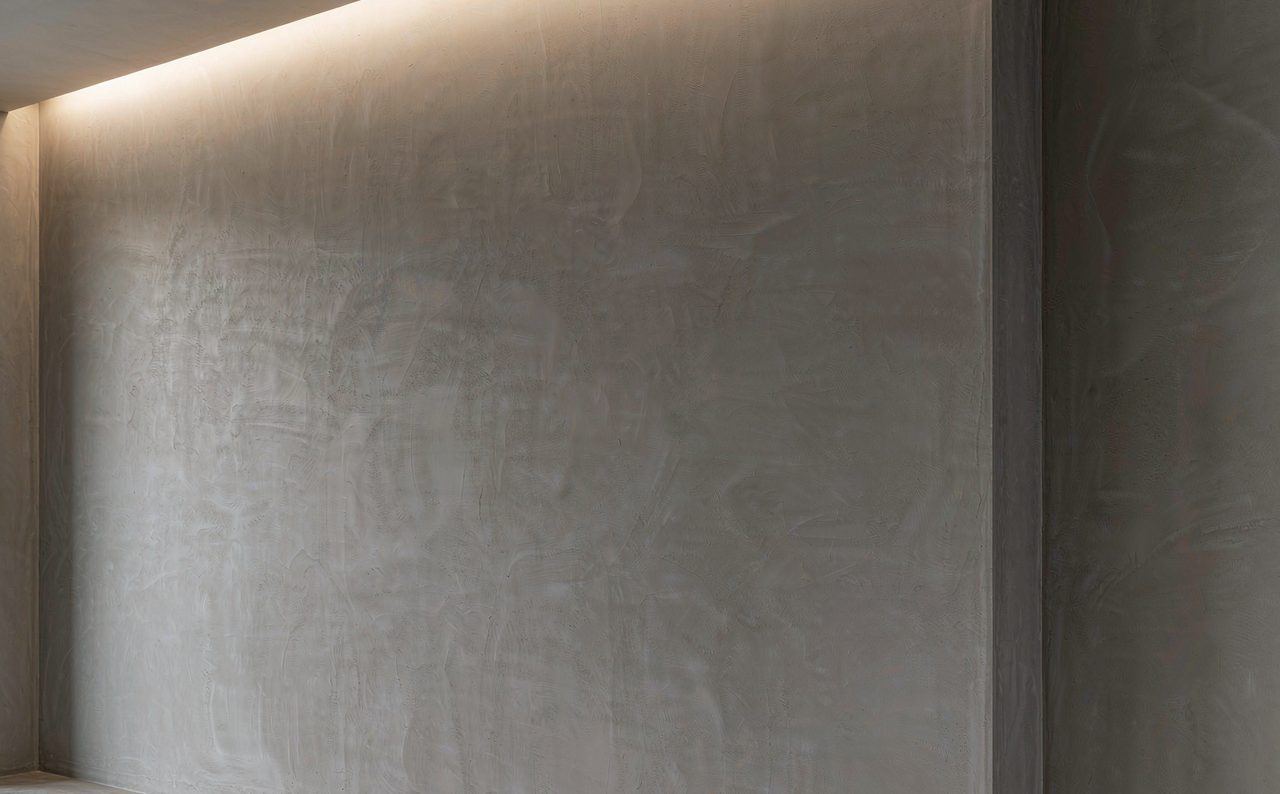
Relief modelled by hand on site, built up in layers over mesh.
Overview
Site-sculpted cement is modelled in place, which suits irregular walls, existing structures and shapes that cannot be precast. Mesh and reinforcement are fixed first, then the build-up is layered so thickness and cure are controlled.
When to choose it
Direct in-situ cement relief is chosen where the form should be continuous with the wall - no joints, no panel lines, no difference in material between the background and the relief. It suits large exterior or interior walls with an organic or hand-modelled character, and it is the only honest way to produce relief on a complex or curved wall. It takes longer on site than panels, so it only makes sense where the wall justifies that.
How it is made
The wall is prepared to a sound, keyed surface, then the relief is built up in layers rather than applied in one pass, because thick single applications crack as they cure. The mix is kept consistent across the whole run, since cement varies visibly between batches. Form is modelled by hand and checked against the design under the real lighting, and the surface is worked before it sets hard. Curing is controlled afterwards - the single most neglected step, and the one that decides whether the relief cracks in the first month.
Typical specifications
| Typical size | 4-200 m2 per elevation |
|---|---|
| Relief depth | 10-150 mm |
| Lead time | 1-4 weeks on site, plus curing |
| Finish | Pigmented, stone-look, or painted and sealed |
Typical applications
- Existing irregular walls
- Entrance features
- Boundary walls
- Interior feature walls
- Landscape structures
What goes wrong on site
- Building relief in one thick application, which shrinks and cracks as it cures regardless of admixtures.
- Leaving the finished work to cure in direct sun and wind without dampening, which produces surface crazing.
- Changing the mix partway through a long wall, which shows as a visible tonal break nobody can remove later.
Before an overseas project starts
Substrate and exposure
Send photographs of the wall and tell us whether it is interior or exterior, and how it is exposed to sun and rain.
Design intent and depth
The design and the relief depth decide the build-up and the programme. Tell us the depth you expect, or send a reference.
Curing conditions
Who will keep the work damp and shaded after we leave, if it is exterior. Curing is a shared responsibility and the commonest cause of failure.
Questions buyers ask
Why choose site-sculpting over precast panels?
When the wall is not flat, access is difficult, or the design has to blend into an existing structure. Precast gives better surface control; site work gives better fit.
How long before it can be sealed?
Cement needs to cure before sealing, typically several days depending on thickness and weather. Sealing too early traps moisture and causes efflorescence.
How a project runs
- 1. EnquirySend photographs, drawings or a 3D file with approximate dimensions and your target date. A short written brief is enough to start.
- 2. Technique recommendationWe come back with the technique that fits your substrate, viewing distance and budget, plus the alternatives we rejected and why.
- 3. Sample and quotationA colour or material sample where relevant, and a costed quotation split into material, labour, finishing, packing and freight.
- 4. ProductionWork proceeds in our own workshop with dated progress photographs at agreed milestones.
- 5. Packing and shippingCrated and marked to your forwarder's requirements, with the full export document set prepared in advance.
- 6. Installation or handoverOur own crew installs on site, or we supply a fixing method statement and supervise your contractor locally.
Packing, shipping and export
Overseas projects are normal work for us, and packing is designed for the journey rather than added afterwards. Components are numbered against a packing list so assembly on site follows the drawings.
- Export plywood crates with foam blocking, desiccant and heat-treated (ISPM 15) timber
- Each crate marked with the shipping mark, crate number, gross and net weight and handling symbols
- Packing list keyed to the assembly drawings, so parts are identifiable on arrival
- Full document set: commercial invoice, packing list, certificate of origin and fumigation certificate
- Delivery on EXW, FOB, CIF or DDP terms depending on your forwarder arrangements
- Container loading plan supplied for large or irregular items, with a photo record of loading
Commercial terms
| Payment | Deposit on order, balance before shipment; T/T or as agreed in the contract |
|---|---|
| Currency | RMB or USD, invoiced in the agreed currency |
| Validity | Quotations held for 30 days unless stated otherwise |
| Scope basis | Material, labour, finishing, packing and freight quoted as separate lines |
| Changes | Variations priced in writing before the work proceeds |
| Warranty | Defects against workmanship and material failure within the agreed warranty period |
Quality control
- Dimensional and finish checks at each production milestone, not only at the end
- Dated progress photographs sent to the client throughout production
- Pre-shipment assembly trial for multi-part pieces, so site fit is verified before dispatch
- Third-party inspection welcome; we will prepare the access and documentation needed
- Written handover with material and colour records, so later repairs can be matched
Other techniques in this capability
Stone-look cement relief
Cement worked to read as natural stone at a fraction of the weight.
Read guide →Bronze & rust-effect relief
Bronze, copper and rust effects cast into cement and plaster relief.
Read guide →GRC components (columns / cornices / balustrades)
Glass-fibre reinforced cement for facades - columns, cornices and balustrades.
Read guide →Landscape retaining-wall decoration
Retaining and boundary walls treated as designed landscape rather than engineering.
Read guide →Water-feature & rockery cement forms
Water features, rockeries and artificial rockwork built in cement.
Read guide →All Cement Relief & GRC techniques · Full capability page · Complete technique library
Need this technique on your project?
Send the brief, approximate dimensions and destination. We will come back with a technique recommendation and a reference price band.
Request a quoteHow export works