Festival light decoration
Festival light decoration for streets, malls and public spaces.
Overview
Festival lighting is a fixed-date project with a very visible result. It has to be built quickly, lit safely, and stored flat afterwards so the following year starts from an existing base.
When to choose it
Festive lighting is chosen to make a place feel like an occasion for a defined period, and it is judged on atmosphere rather than on illumination. It suits high streets, malls, hotels, city centres and commercial districts. The critical planning constraints are the installation window, the power available across many separate locations, and a removal programme that keeps the fittings reusable for the following year.
How it is made
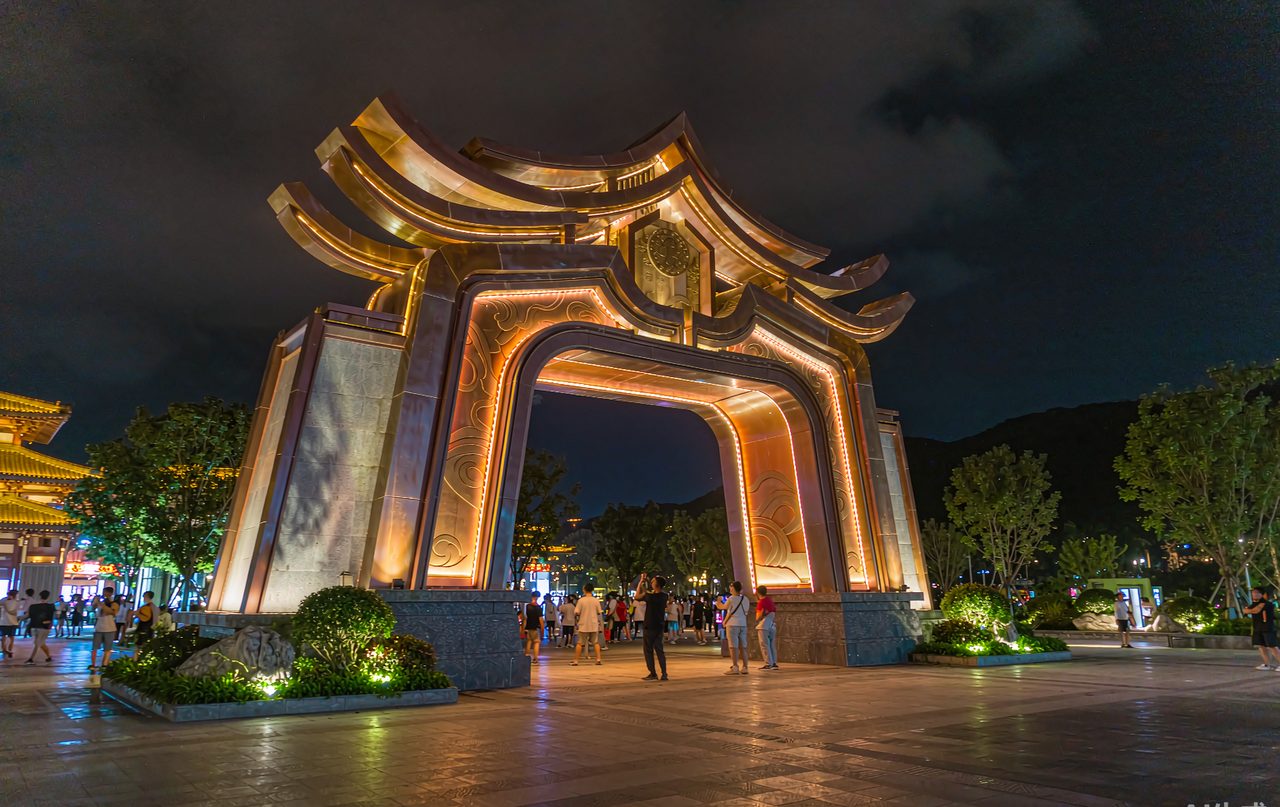
The scheme is designed as a route or a series rather than as isolated features, so the atmosphere builds as people move through the area. Motifs and fittings are selected for reuse and standardised into modules, which is what makes a large scheme affordable and quick to install. Fixings are designed for the host structure - trees, columns, facades, catenary wires - with no damage to the trees and no reliance on whatever the installer happens to find on site. Load, power and control are planned across the whole scheme, and every fitting is tested before dispatch.
Typical specifications
| Elements | Light tunnels, motif lights, tree wraps, ceiling light fields |
|---|---|
| Fittings | IP65+ LED with weather-rated connectors |
| Programme | Installed in a short window before the festival |
| Storage | Labelled, flat-pack returns for off-season storage |
Typical applications
- Shopping streets
- Mall and plaza decoration
- City centres
- Parks and squares
- Hotel and resort entrances
What goes wrong on site
- Designing each location separately, so the scheme has no coherence as a route and no sense of build.
- Using one-off bespoke elements that cannot be reused, which makes every year a new and full-cost project.
- Fixing into trees or historic structures without a considered method, causing damage that outlasts the installation.
Before an overseas project starts
Route or sites
Tell us whether this is a single site or a scheme. Coherence across locations is what makes festive lighting feel like an event.
Fixing structures
Send photographs of the trees, columns or facades. Fixing methods are designed to them and must avoid damage.
Reuse and storage
Tell us if the scheme runs again. Standardised, reusable modules cost more now and far less in year two.
Questions buyers ask
Are the lights safe in rain and wind?
With IP65+ fittings, sealed connectors and mechanically rated fixings. Outdoor installations are designed for the local wind loading.
Can the scheme be extended next year?
Yes. Structure and lighting are reusable; we produce a condition report at de-rig and recommend what to replace before the next season.
How a project runs
- 1. EnquirySend photographs, drawings or a 3D file with approximate dimensions and your target date. A short written brief is enough to start.
- 2. Technique recommendationWe come back with the technique that fits your substrate, viewing distance and budget, plus the alternatives we rejected and why.
- 3. Sample and quotationA colour or material sample where relevant, and a costed quotation split into material, labour, finishing, packing and freight.
- 4. ProductionWork proceeds in our own workshop with dated progress photographs at agreed milestones.
- 5. Packing and shippingCrated and marked to your forwarder's requirements, with the full export document set prepared in advance.
- 6. Installation or handoverOur own crew installs on site, or we supply a fixing method statement and supervise your contractor locally.
Packing, shipping and export
Overseas projects are normal work for us, and packing is designed for the journey rather than added afterwards. Components are numbered against a packing list so assembly on site follows the drawings.
- Export plywood crates with foam blocking, desiccant and heat-treated (ISPM 15) timber
- Each crate marked with the shipping mark, crate number, gross and net weight and handling symbols
- Packing list keyed to the assembly drawings, so parts are identifiable on arrival
- Full document set: commercial invoice, packing list, certificate of origin and fumigation certificate
- Delivery on EXW, FOB, CIF or DDP terms depending on your forwarder arrangements
- Container loading plan supplied for large or irregular items, with a photo record of loading
Commercial terms
| Payment | Deposit on order, balance before shipment; T/T or as agreed in the contract |
|---|---|
| Currency | RMB or USD, invoiced in the agreed currency |
| Validity | Quotations held for 30 days unless stated otherwise |
| Scope basis | Material, labour, finishing, packing and freight quoted as separate lines |
| Changes | Variations priced in writing before the work proceeds |
| Warranty | Defects against workmanship and material failure within the agreed warranty period |
Quality control
- Dimensional and finish checks at each production milestone, not only at the end
- Dated progress photographs sent to the client throughout production
- Pre-shipment assembly trial for multi-part pieces, so site fit is verified before dispatch
- Third-party inspection welcome; we will prepare the access and documentation needed
- Written handover with material and colour records, so later repairs can be matched
Other techniques in this capability
Light festival & light show
Light festivals and light shows, programmed as a timed experience.
Read guide →Luminous art installation
Luminous art - light used as the material of the artwork itself.
Read guide →Architectural projection mapping
Architectural projection mapping, aligned to the building itself.
Read guide →All Architectural Lighting & Light Art techniques · Full capability page · Complete technique library
Need this technique on your project?
Send the brief, approximate dimensions and destination. We will come back with a technique recommendation and a reference price band.
Request a quoteHow export works